
Home » Portable vs Fixed Veterinary X-ray Systems
Veterinary X-ray systems
Choosing between a portable and fixed veterinary X-ray system is one of the most important equipment decisions a clinic will make.
On paper, portable systems appear cheaper, flexible, and easy to deploy.
In reality, the decision comes down to:
- Image quality
- Workflow efficiency
- Radiation safety
- Long-term cost
This article breaks down the real-world differences between portable and fixed veterinary X-ray systems based on actual field experience and not marketing brochures.

Where portable X-ray systems make sense
Portable X-ray systems have a valid place in the market. They are well suited for:
- Mobile veterinarians
- Home visit services
- Equine and bovine specialists
- Remote or rural work where infrastructure is limited
They provide a lower entry point and flexibility when a fixed installation is not practical. However, this is where most comparisons stop and where the real limitations begin.
The reality of portable systems
A portable X-ray unit is only part of the system. To operate effectively, it must be paired with:
- A DR (Digital Radiography) panel or
- A CR (Computed Radiography) system.
This means the true cost is never just the portable generator.
The bike vs car analogy
Buying a portable X-ray is like buying a bike instead of a car.
- It will get you from A to B
- It serves a purpose
- But it comes with clear limitations
- The biggest limitation is power output.
Portable systems use mono-block technology, which restricts:
- Exposure power
- Penetration capability
- Overall image quality consistency
This directly impacts diagnostic confidence, especially in larger animals or more complex cases.
The “High-Power Portable” problem
There are attempts to overcome these limitations with higher-powered portable units. For example, units like the Jade offer increased output but introduce new constraints:
- Requires a 15A power supply
- Reduces true portability
- Adds significant weight (20–25kg for the generator alone)
Requires additional equipment:
- DR panel
- Heavy-duty laptop or workstation
- At that point, portability becomes questionable.
You are effectively transporting:
- A heavy generator
- The detector
- A computer system
- This is no longer “grab and go”.
Radiation safety: The overlooked risk
This is where portable systems fall behind significantly. When using a portable unit you:
- Operate in uncontrolled environments
- Rely on PPE (lead gowns, gloves, shields)
- Still are partially exposed during exposures
There is no true separation between:
- Operator
- Patient
- Radiation source
In contrast, a fixed X-ray system operates within a purpose-built room, allowing:
- Full shielding
- Operator barriers
- Ability to step out during exposure
This is not just convenience, it is:
- Safer for staff
- More compliant with regulations
- Better for long-term occupational health
Why clinics move to fixed X-ray systems
In real-world scenarios, clinics typically upgrade from portable to fixed systems when:
- Image quality becomes inconsistent
- Repeat exposures increase
- Workflow slows down
- Staff fatigue increases
- Safety concerns become more apparent
- Portable systems are often a starting point.
Fixed systems are where clinics stabilise and scale.
Showcasing the VET X-ray system

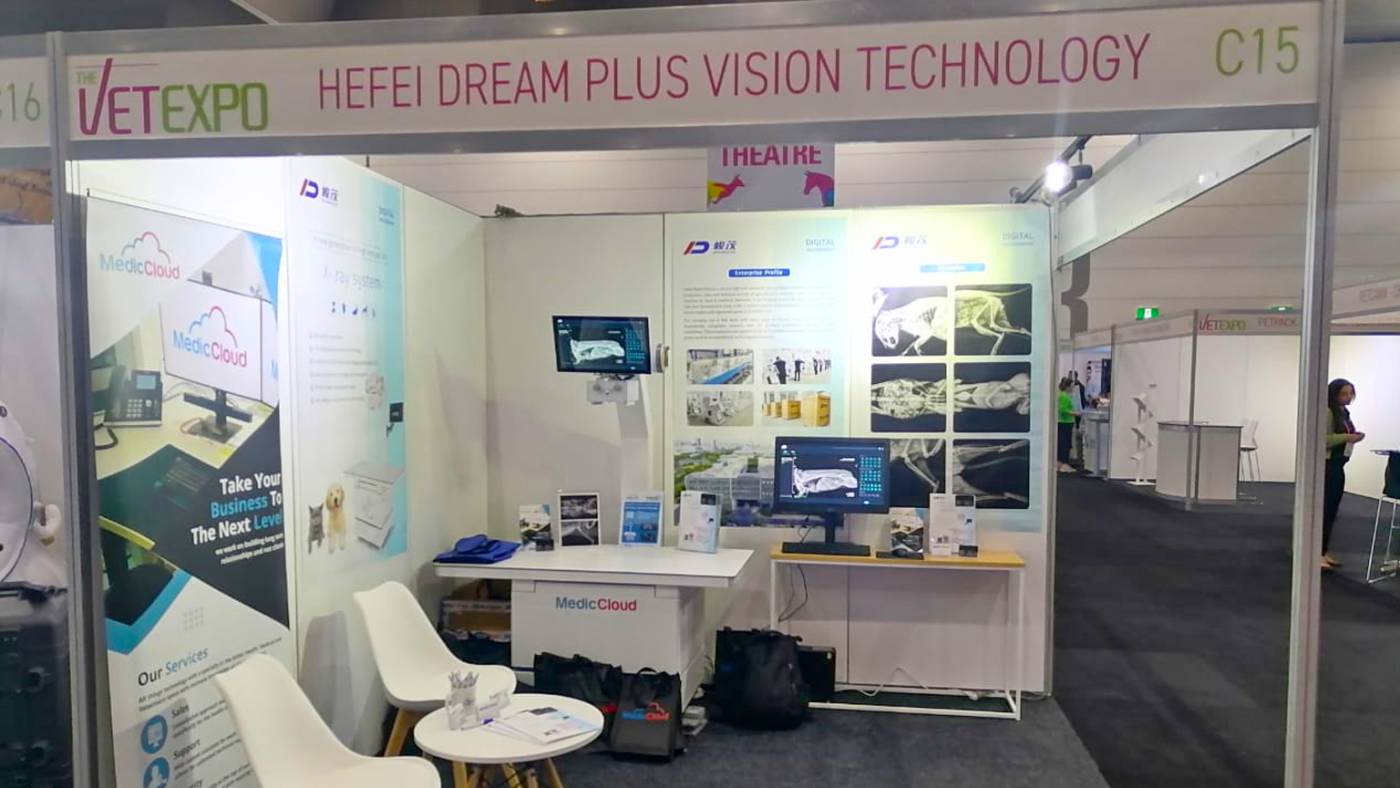
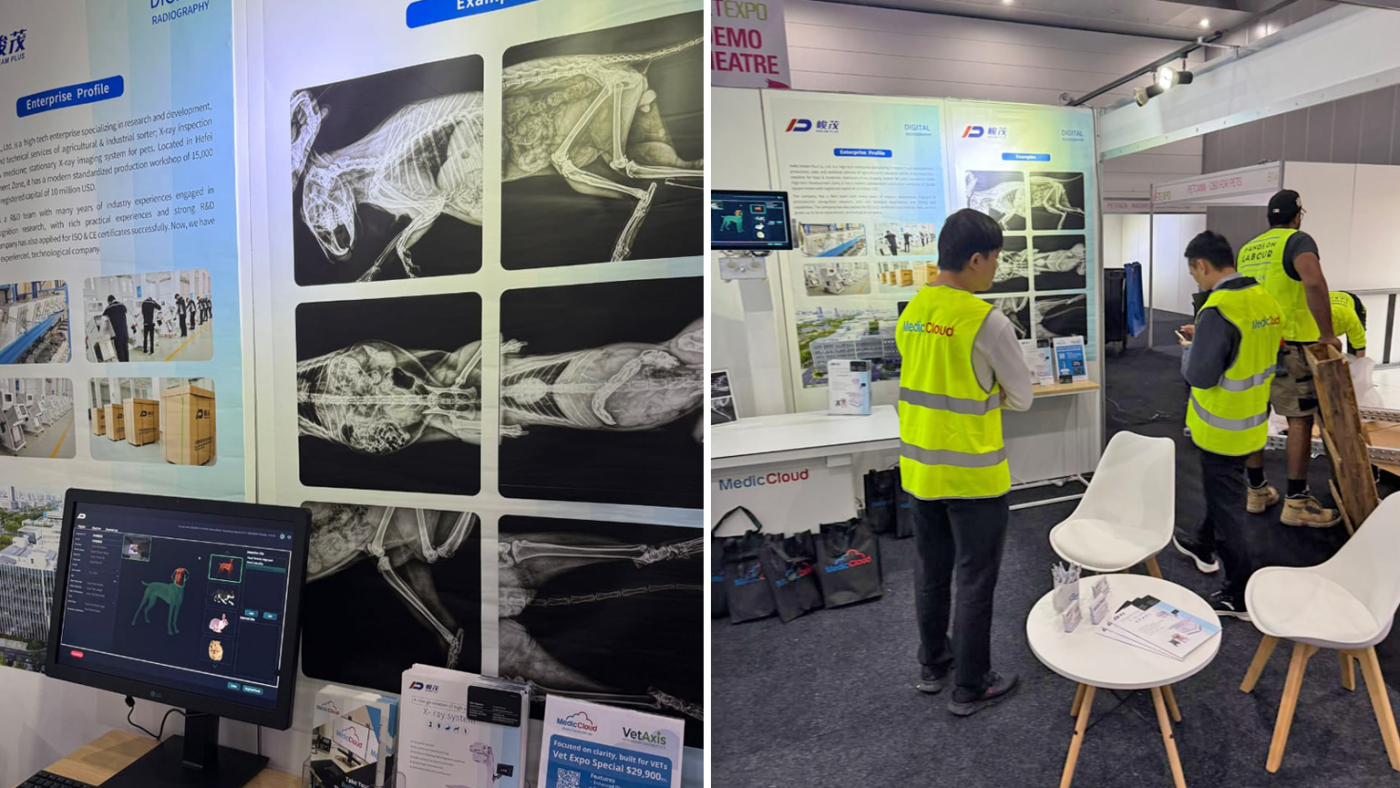
Medic Cloud and HF DreamPlus together at an Australian VET fair.
Addressing the two biggest barriers: Price and space
Historically, clinics chose portable systems for two reasons:
- Cost
- Limited space
These barriers have now been addressed.
The modern fixed alternative: Designed for real clinics
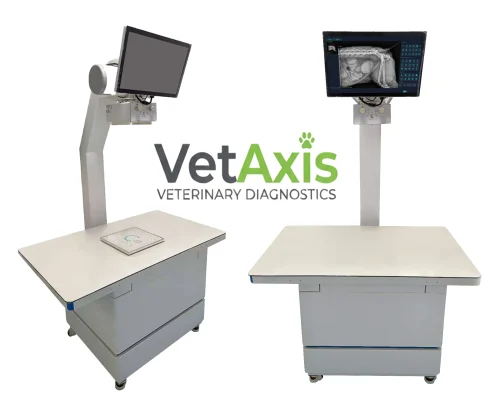
The HF DreamPlus VetAxis system was developed specifically to remove these limitations.
Space efficiency
- Built on wheels for mobility within the room
- Can be stored away when not in use
- Multiple table size options available
- Suitable for small rooms
- Scalable for larger clinics
Standard power requirements
- Runs on single-phase power
- Uses a standard power point
- No need for expensive electrical upgrades
Practical workflow design
- Stable positioning
- Consistent exposures
- Faster imaging process
- Reduced need for repeat scans
The pricing reality: Portable vs fixed X-ray systems
This is where the biggest misconception exists.
Typical portable setup
- Portable generator: $12,000 – $15,000
- DR panel: $25,000 – $35,000 or
- CR system: $15,000 – $22,000
Total: $27,000 to $50,000+ depending on configuration
Fixed System (VetAxis by HF DreamPlus)
Complete system (generator + DR panel + workstation): Under $30,000
Why this pricing exists
This is not a “cheap system”. It is a result of:
- Direct manufacturer collaboration
- Controlled supply chain
- Eliminated unnecessary margins
- Purpose-built integration (not pieced together components)
- There is no compromise on image quality or functionality.
A shift in thinking: Equipment lifecycle
Veterinary imaging has evolved:
- Wet film → CR → DR
- Each generation replaced the previous
- Modern systems are no longer built for 20–30 year lifespans.
They are:
- More advanced
- Efficient
- Cost-effective
At current pricing levels, clinics can:
- Invest in a high-performing system
- Run it efficiently
- Replace it every 7–10 years if needed
- Instead of overpaying upfront for marginal gains.
The bottom line
Portable systems are:
- Useful
- Necessary in certain environments
- A valid entry point
- But they are not a long-term solution for most clinics.
Fixed systems provide:
- Better image quality
- Safer operation
- Faster workflow
- Greater diagnostic confidence
Final position
If you are a mobile or field-based vet → portable makes sense
If you are a clinic looking for consistency, efficiency, and safety → fixed is the correct solution.
The key is understanding the trade-offs properly, not relying on price alone.
Contact us today for a conversation about this VET digital imaging technology.
Read more blogs



Subscribe to Medic Hub
Get the latest insights direct to your inbox.
