
Home » Veterinary X-ray Systems can be Affordable
Veterinary X-ray systems are expensive and they don’t need to be
One of the most common questions we get from veterinary clinics is: “Why does a veterinary X-ray system cost so much?”
It’s a fair question, especially when you start seeing pricing anywhere from $40,000 through to $80,000+.
The reality is simple. You’re often paying for how the system is sold, not how it performs.
At Medic Cloud, we’ve spent years analysing, installing, and testing these systems in real clinical environments, and the gap between price and actual performance is far wider than most clinics realise.
🔈 Listen as podcast
Veterinary X-ray Systems can be Affordable
Duration: 01:32

Why do veterinary X-ray systems cost so much?
Veterinary X-ray systems are expensive largely due to supply chain structure, not engineering complexity.
Most systems on the market involve:
- Manufacturer → distributor → reseller layering
- Multiple margin points across the supply chain
- Heavy branding and marketing overhead
- Systems built from mixed third-party components
This creates:
- Inflated pricing
- Inconsistent system integration
- Higher costs without better outcomes
At Medic Cloud, we routinely assess systems where the price reflects the brand name, not the actual performance delivered in a clinical setting.
Why does a DR panel cost $25,000 to $35,000?
This is where most clinics start questioning the numbers.
A typical setup looks like:
- DR panel: $25,000 – $35,000
- Portable generator: $12,000 – $15,000
or
- CR system: $15,000 – $22,000
This results in $27,000 to $50,000+ before you even have a complete system. The issue is not the technology itself. It is:
- Restricted supply channels
- Legacy pricing models
- Vendor-controlled distribution
At Medic Cloud, we’ve seen clinics pay premium pricing for systems that deliver no measurable improvement in image quality or workflow.
Can you get a complete veterinary X-ray system for Under $30,000?
Yes, but only if the system is engineered and supplied differently.
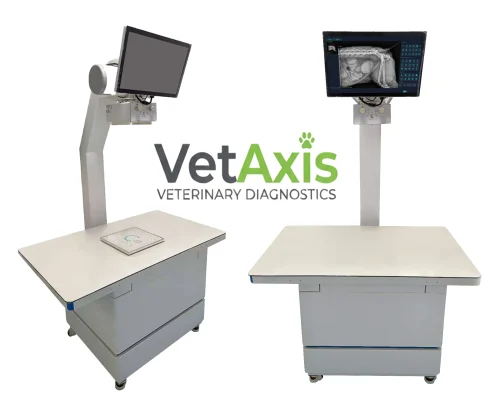
Through direct collaboration with HF DreamPlus, Medic Cloud has developed the VetAxis complete veterinary X-ray solution designed to remove unnecessary cost layers while maintaining performance.
This was achieved through:
- Non-negotiable system design requirements from Medic Cloud
- Direct manufacturer collaboration (no multi-layer distribution)
- Fully integrated system design (not pieced together components)
- Leveraging large-scale manufacturing capability
The outcome is a complete fixed veterinary X-ray system, including DR panel, for under $30,000. This is not a stripped-down system. It is a fully functional, clinic-ready solution.
Is a lower price a compromise on quality?
No. Not when the system is engineered correctly. The assumption that lower cost equals lower quality is outdated.
Modern systems benefit from:
- Advances in detector sensitivity
- Software-driven image processing
- More efficient manufacturing processes
- Reduced reliance on legacy hardware
The real question is: How well is the system designed, configured, and tested?
At Medic Cloud, every system is:
- Tested in controlled environments
- Validated against Australian standards
- Configured for real clinical workflows
With oversight from:
- Licensed Radiation Tester (Department of Health VIC)
- Consultant Radiation Expert (EPA NSW)
- Performance is verified not assumed.
Why are some systems still double the price?
Higher-priced systems often reflect:
- Legacy brand positioning
- Heavier marketing overhead
- Multi-layer distribution models
- Minimal real-world performance differences
In many cases:
- Image quality is comparable
- Workflow efficiency is similar
- Lifespan remains within the same 7–10 year range
Clinics are often paying for:
- Brand perception
- Historical positioning
- Not better clinical outcomes.
What is the real cost over time?
Veterinary imaging has evolved significantly. Systems are no longer built for 20–30 year lifespans.
Modern systems are more:
- Advanced
- Efficient
- Affordable to replace
This allows clinics to:
- Invest in a high-performing system
- Operate efficiently
- Upgrade every 7–10 years if needed
Instead of overpaying upfront and holding onto outdated equipment.
At Medic Cloud, we encourage clinics to think in terms of lifecycle cost, not just upfront spend.
Is it better to start with portable to save money?
Not in most clinic environments. Portable systems appear cheaper initially, but often require:
- Additional DR or CR systems
- Compromises in image quality
- Increased operator exposure
- Workflow inefficiencies
In many cases, clinics start with portable, then upgrade to fixed systems
This results in:
- Double spending
- Operational disruption
- Lost time
Based on real-world deployments, Medic Cloud recommends assessing long-term requirements upfront rather than making short-term cost decisions.
Showcasing the VET X-ray system

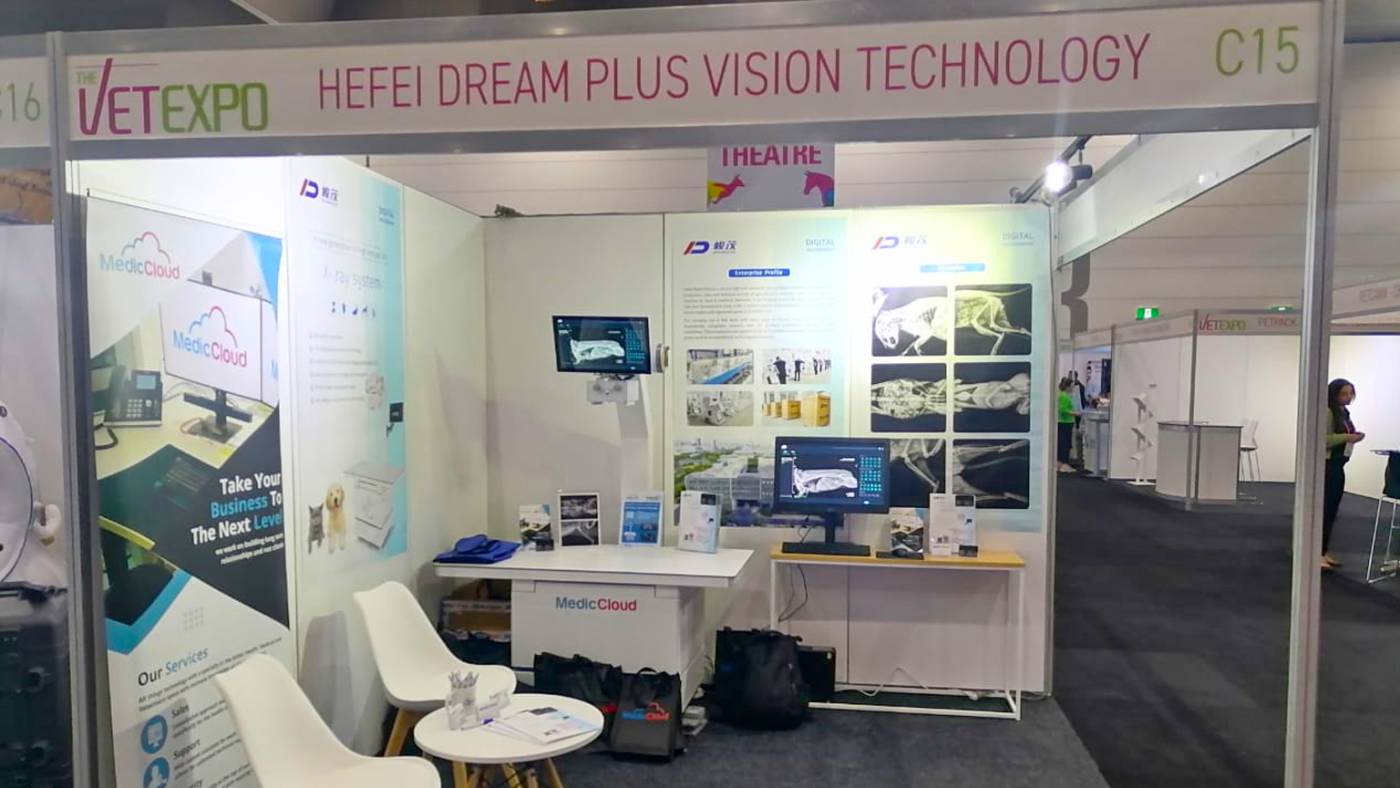
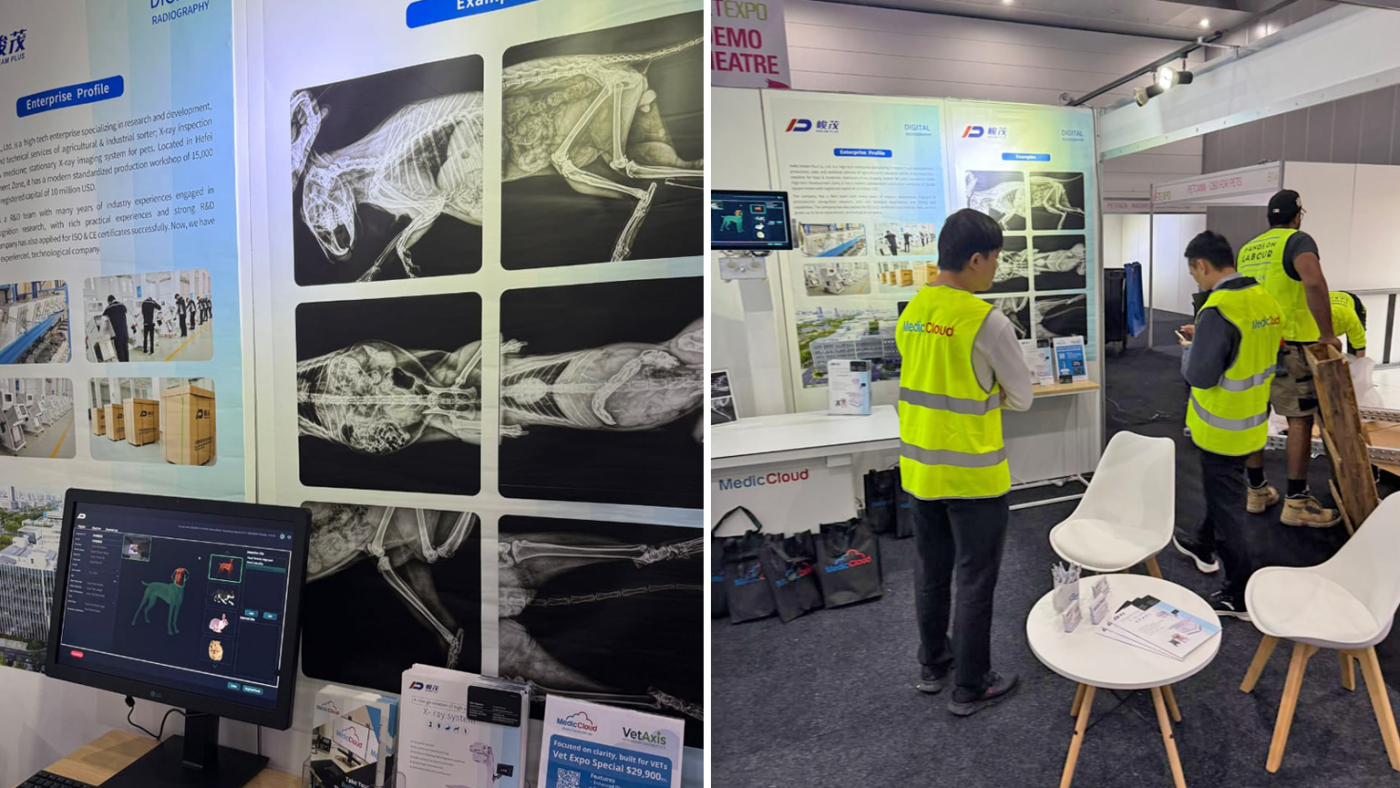
Medic Cloud and HF DreamPlus together at an Australian VET fair.
What do you actually get for under $30,000?
With the VetAxis system by HF DreamPlus, exclusively delivered by Medic Cloud, you receive:
- Fixed X-ray system
- High-sensitivity DR panel
- Integrated workstation
- APR-configured exposure system
- DICOM and MWL compatibility
- Local installation support
This is a complete system, not a partial solution.
Is the pricing fixed or can It change?
The pricing outlined in this article reflects current market conditions at the time of writing. However, pricing in the imaging industry is influenced by several external factors and may change.
These include:
- Supply and demand levels
- Stock availability
- Manufacturer pricing adjustments
- Exchange rate fluctuations
- Shipping and logistics costs
For this reason, all pricing should be confirmed at the time of formal quotation.
Does the price include installation and training?
No. The pricing referenced in this article is for the X-ray system itself only.
Additional costs may apply depending on your clinic’s requirements, including:
- Delivery and logistics
- Installation and commissioning
- Training and onboarding
- Site preparation (if required)
Every clinic environment is different, and final project costs will vary based on location, readiness, and workflow needs.
The bottom line
Veterinary X-ray systems are expensive because of how they are sold, not because they have to be.
Portable systems:
- Appear cheaper
- Often introduce compromises
Legacy systems:
- Carry inflated pricing
- Do not necessarily deliver better outcomes
Modern systems:
- Deliver equal or better performance
- Have significantly more efficient price points
Final position
If you are evaluating X-ray systems, the key question is not “What does it cost?” It is: “What am I actually paying for?”
At Medic Cloud, we focus on:
- Engineering over branding
- Performance over perception
- Compliance over assumption
Backed by:
- Experienced field engineers
- Licensed Radiation Tester (Department of Health VIC)
- Consultant Radiation Expert (EPA NSW)
We deliver systems that are built correctly, priced realistically, and supported locally.
Contact us today for a conversation about this VET digital imaging technology.
Read more blogs



Subscribe to Medic Hub
Get the latest insights direct to your inbox.
