
Home » Clinic IT Mistakes and How to Avoid Them
Clinic IT mistakes spotlight
Managing IT in a healthcare clinic isn’t just about installing software or fixing computers. It’s about protecting sensitive patient data, keeping systems running, and enabling your team to deliver care without disruption. Unfortunately, many clinics still fall into the same IT traps, usually because their systems were never built with medical workflows in mind.
Below, we highlight seven of the most common IT mistakes we see in clinics and how you can avoid them.
🔈 Listen as podcast
Clinic IT Mistakes and How to Avoid Them
Duration: 01:44

Assuming standard IT providers understand healthcare
The mistake: Many clinics hire a general IT company that doesn’t specialise in healthcare. While these providers may be great at fixing office computers, they often miss critical compliance issues, workflow needs, and device integrations specific to medical environments.
The solution: Work with an IT partner who understands:
- Healthcare compliance (Privacy Act, RACGP, My Health Record)
- Medical software like PACS, RIS, EMR, dental and practice management systems
- Secure, segmented network environments and device interoperability
Tip: Ask your IT provider if they’ve worked with radiology systems or HIPAA-like compliance. If they hesitate, it may be time to reconsider.
Relying on a single internet connection
The mistake: Clinics with cloud-based software and VoIP phones that only have one internet service are one outage away from total disruption.
The solution: Implement a failover connection using 4G/5G or a secondary fibre/NBN line. These kick in automatically when your main connection fails, allowing your systems and phones to keep running without interruption.
Relying on friends, patients, or relatives in IT
The mistake: It’s surprisingly common for clinics to rely on a friend of the business, a helpful patient, or a relative who “works in IT” to manage clinical systems. While they may mean well, general IT knowledge doesn’t translate to medical-grade support.
The solution: Just like the medical field, IT has specialties. You wouldn’t see a psychologist for a broken foot (though they might help you manage the pain), and the same logic applies here.
Think of general IT support like a GP: great at general advice, but if you’re dealing with complex clinical systems, compliance issues, or diagnostic equipment, you need a specialist. Sadly, because IT is not a regulated industry in the same way as healthcare, we often see generalist providers overstate their expertise.
This isn’t about attacking individuals. It’s a pattern we’ve observed repeatedly in the industry. The outcome? Misconfigured systems, non-compliant storage, and vulnerable networks that put clinics and patients at risk.
Tip: Ask your provider for real examples of healthcare deployments, and confirm their knowledge of medical compliance and software.
Ignoring user access permissions
The mistake: Everyone in the clinic including admin staff, nurses, contractors has the same level of access to clinical data, patient files, or device controls.
The solution: Set clear user roles and permissions. Only give access to what each team member needs. This minimises the risk of data breaches and accidental system changes.
Remember, most cybersecurity incidents aren’t caused by hackers. They’re caused by human error.
Medic Cloud’s software product range

Microsoft
Microsoft
Microsoft

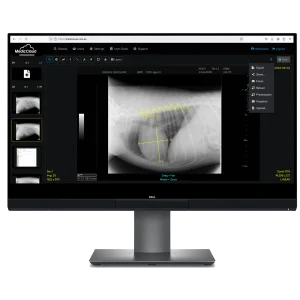
Private Cloud PACS
Medic Cloud’s software product range.
Skipping proper IT documentation
The mistake: No one knows the clinic Wi-Fi password. No one remembers the last time the backup was tested. Your IT provider left and took all the system knowledge with them.
The solution: Maintain internal documentation for:
- Passwords and access credentials (stored securely)
- Network maps and equipment lists
- Software licences and expiry dates
- Support contact details and escalation procedures
Medic Cloud clients benefit from structured, secure IT documentation that keeps teams aligned and audits simple.
Treating cybersecurity as “Set and forget”
The mistake: You installed antivirus software three years ago and haven’t touched it since.
The solution: Cybersecurity requires active management. This includes:
- Regular security patching and updates
- Ongoing monitoring and threat detection
- Strong passwords, MFA (multi-factor authentication), and endpoint protection
Have you had a cybersecurity check in the past 12 months? If not, now’s the time.
Skimping on IT budget planning
The mistake: Many clinics don’t budget for IT beyond the basics, leading to reactive spending, panic fixes, and short-term thinking.
The solution: Develop a proactive IT budget that includes:
- Annual upgrades and refreshes
- Cybersecurity insurance and compliance audits
- Staff training on new systems
A predictable IT budget helps avoid surprises and ensures your systems grow with your clinic.
Final Thoughts
The best clinical IT environments aren’t built by accident, They’re built with healthcare in mind. Avoiding these common mistakes can save you time, money, stress, and even legal exposure.
Contact us today on 1300 658 103 for a conversation and don’t make these clinic IT Mistakes.
Read more blogs



Subscribe to Medic Hub
Get the latest insights direct to your inbox.
