
Home » Veterinary Staff Radiation Exposure
What Veterinary Staff Need to Know About Radiation Exposure
This is one of the most common questions asked in veterinary clinics: “Am I safe taking X-rays?”
It’s a fair question and in many cases, the answer depends entirely on:
- The equipment being used
- The environment you are working in
- How the system is configured
Radiation safety is not about guesswork. It is about design, process, and control.
🔈 Listen as podcast
Veterinary Staff Radiation Exposure
Duration: 01:55
Am I safe taking X-rays as a vet or nurse?
The short answer: You can be but not all setups are equal. So how can we take the necessary steps on the topic of veterinary staff radiation exposure?
Your level of safety depends on:
- Distance from the radiation source
- Shielding in the environment
- Exposure time and technique
- Type of X-ray system being used
In many veterinary clinics, staff are:
- Holding animals
- Standing nearby
- Relying on PPE
This increases exposure risk compared to human radiography environments.
Is it safe to take X-rays when pregnant?
This is a critical question and it should not be taken lightly. The safest position is that pregnant staff should minimise or avoid direct involvement in X-ray exposure wherever possible.
While PPE (lead aprons, shields) reduces exposure:
- It does not eliminate it
- Scatter radiation is still present
- Repeated exposure over time carries risk
Best practice:
- Use systems that allow full operator separation
- Step out of the room during exposure
- Avoid handheld or close-proximity systems entirely
If your current setup requires you to remain near the patient during exposure, it is not an optimal safety model.
Do lead aprons fully protect me?
No. Lead aprons are important, but they are not a complete solution. They:
- Reduce radiation exposure
- Protect key organs
But they do not:
- Cover the entire body
- Eliminate scatter radiation
- Replace proper shielding and distance
At Medic Cloud, we supply a full range of:
- Lead aprons
- Thyroid shields
- Lead gloves
However, PPE should be your last line of defence. Not your primary safety strategy.
Are hand-held X-ray machines safe?
This is where there is significant misunderstanding in the industry. Hand-held X-ray units, particularly dental units, are often marketed as safe and low-dose.
Based on our independent testing, we do not consider them safe for routine use.
What we found
Medic Cloud conducted controlled lab testing using:
- Government-certified, high-sensitivity dose meters
- Calibrated compliance-grade measurement equipment
Results showed that significant scatter radiation exposure to operators, including:
- Hands
- Torso
- Legs
This occurred:
- Even at lower exposure settings
- Even when used correctly
Why hand-held systems are a problem
Hand-held systems remove the most important safety principles:
- Distance
- Shielding
- Separation
Instead, they require:
- Direct operator proximity
- Manual handling during exposure
- Reliance on partial shielding
This creates cumulative exposure risk over time.
Our position on hand-held X-ray systems
Medic Cloud does not supply or support hand-held X-ray units. This is based on:
- Measured data
- Compliance expectations
- Long-term staff safety considerations
This is not negotiable.
Are portable X-ray systems safe?
Portable systems are safer than handheld but still not ideal. They require:
- Close proximity to the patient
- Reliance on PPE
- Operation outside controlled environments
This increases:
- Scatter exposure
- Operator risk
- Dependence on correct behaviour
Portable systems have their place (mobile vets, equine work), but they are a compromise.
Our range of VET systems and software
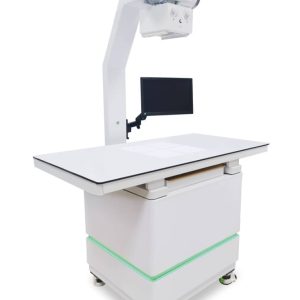

DreamPlus
Carestream

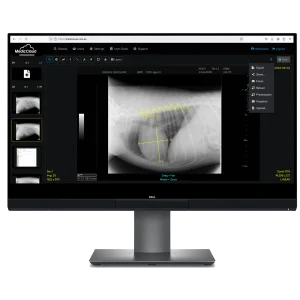
Private Cloud PACS
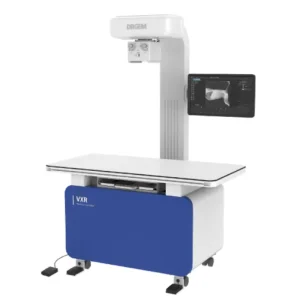
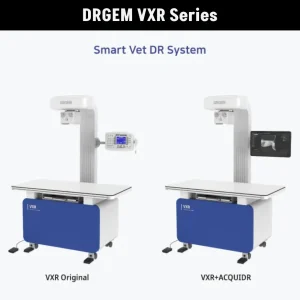
Our range of VET systems and software.
What is the safest way to take veterinary X-rays?
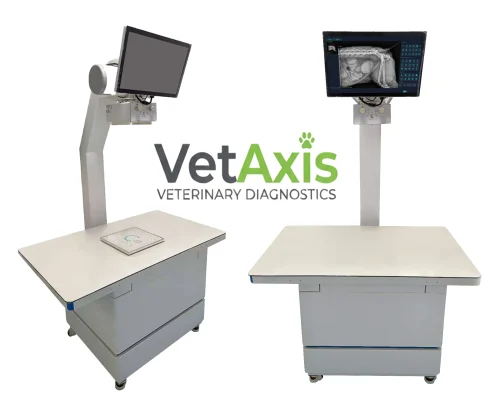
The safest model is a fixed X-ray system in a purpose-built room. This allows for:
- Structural shielding
- Defined exposure zones
- Operator barriers
- Ability to step away during exposure
This dramatically reduces:
- Direct exposure
- Scatter radiation
- Long-term health risk
Why system design matters more than you think
Radiation safety is not just about shielding. It is also about:
- Exposure accuracy
- Repeat imaging
- Workflow efficiency
Poorly configured systems lead to:
- Repeat scans
- Higher dose
- Increased exposure
Well-designed systems:
- Deliver consistent images
- Reduce repeat exposure
- Keep dose controlled
The long-term risk most people ignore
Radiation exposure is cumulative. It builds over days, weeks and years.
Even low-dose exposure, repeated over time, can:
- Increase health risks
- Impact staff confidence
- Create workplace safety concerns
The bottom line
If you are serious about veterinary staff radiation exposure and you are asking yoursef “Am I safe taking X-rays?” the real answer is it depends on your setup.
- Hand-held systems → high operator exposure risk
- Portable systems → compromise
- Fixed systems → safest and most controlled
Final Position
Radiation safety should not rely on:
- Assumptions
- Marketing claims
- Convenience
It should be based on:
- Measured data
- Proper system design
- Controlled environments
At Medic Cloud, safety is engineered into every system we support and enforced in every recommendation we make.
Contact us today for a conversation about our VET digital imaging technology.
Read more blogs

Subscribe to Medic Hub
Get the latest insights direct to your inbox.
